Some people say that knitting is an inexpensive hobby. I think, like most crafts, it is as expensive or inexpensive as you make it. It is one of those hobbies you could spend a fortune on, or you could manage with a small budget. It is entirely up to you.
As I’m on a student budget i.e. full time studying with a couple of casual jobs for a small income, I’ve been knitting on a budget. In this post, I wanted to share my approach to different tools, how I began, and how I’m progressing.
Essential tools
Knitting is considered one of the oldest crafts in the world. It is essentially twisting a piece of yarn between two sticks to create interlocking loops resulting in a fabric. When you strip it down to the basics like that, you realise there is very little that can be called absolutely essential for this craft: a pair of needles and yarn. You may already have a scissor at home, and even if not, you can use a sharp object – knife, blade, etc. – to cut the excess yarn at the end. It can’t be simpler.
If you have never knitted before, I strongly suggest that you try to borrow the tools from someone who already has the tools. There really is no reason to spend money on a hobby when you don’t know if it is for you. (I’m sure we all know people who decided they are going to work out at home, bought tons of equipment and gave up working out after a few days.) Depending on why you want to learn knitting, this can be hard.
I’m realising that there’s a boom in yarn-related crafts, especially crochet, among young people. This means we are bombarded with a lot of “cute” tools and instruments. If you want to learn a yarn-craft because it looks cute to do, you might be tempted by the vast options out there. If you are interested to learn for the sake of learning, it’s much easier.
Quality tools can improve the end result. If you are just starting out though you can learn the skill on the most basic set of tools. Quality of tools matter when you have mastered the skill.
I first tried to borrow the tools from the one person here I know has been crocheting for decades. Unfortunately, they had just given away their knitting equipment and had only a 3.5mm aluminium circular needle and some 5ply dark blue merino wool to spare. Merino wool is one of the warmest, lightest, and rather expensive yarn out there; needless to say, I was not about to waste it on learning basics.
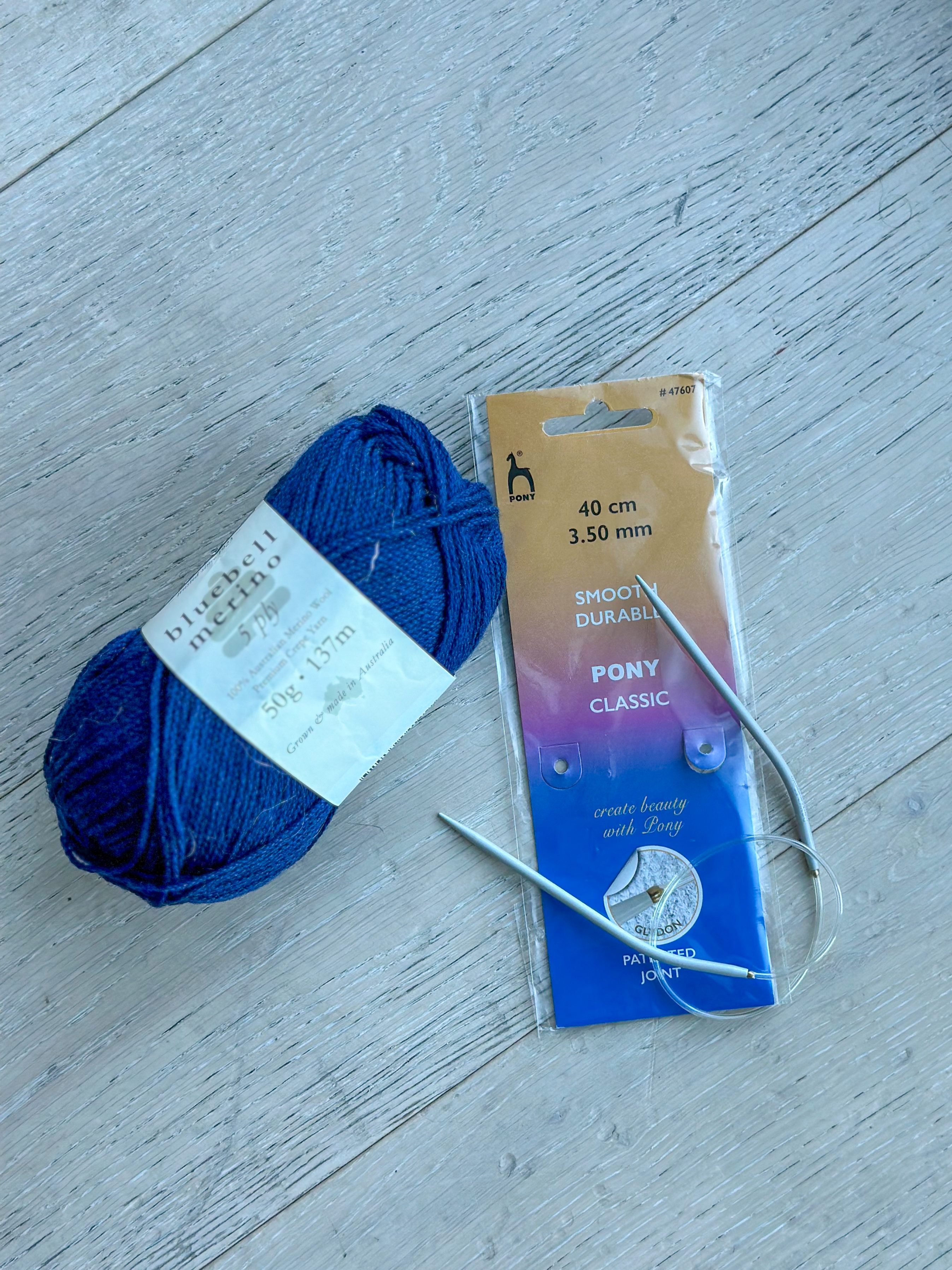
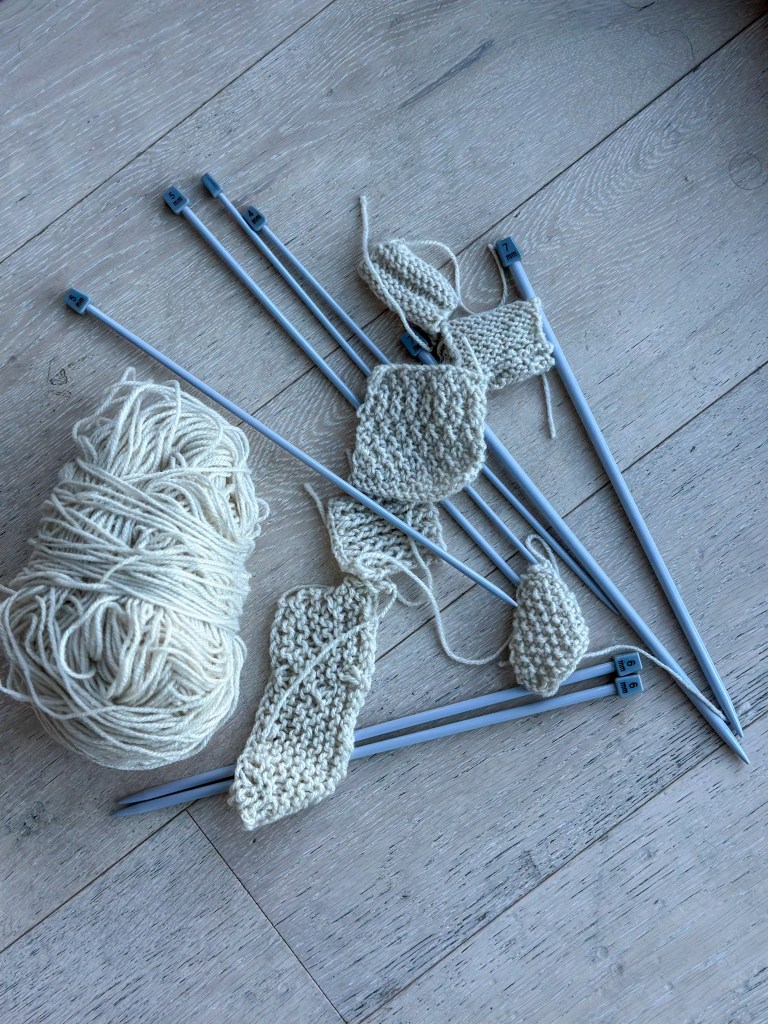
All the tutorials I watched recommended that beginners start with bamboo needles and a light coloured yarn so you can see the stitches you make. Bamboo needles were expensive, still, nearly AUD 10 each; again, I was not going to spend a full-day public transport fare on a pair of needles when I might not take to knitting. So, my first tools, the ones I learnt to knit with, to figure out if I like knitting came very cheap from Kmart.
- A set of aluminium needles (4 pairs): $6
- A ball of acrylic yarn in cream: $2
I spent $8 and two weeks getting familiar with the motion of the needles, the way a stitch works, and different patterns I can stitch. I learnt I like knitting well enough to start a project.
First project: The tools
The traditional first knitting project is a scarf; probably because it’s one long piece of fabric without any bells and whistles: perfect for beginners. By this point I had learnt about chunky knitting and that it takes far less time (but looks very different from smaller knits. Some reference photos below). If my first project spanned months, it was unlikely I will stick to this hobby. Instead, I chose to knit a chunky scarf, but seam it at the end to make it an infinity scarf.
For this, I had to buy supplies again. I looked up cheap yarn online – acrylic yarn is the cheapest, but it doesn’t feel the best against your skin and is not very good for the environment; natural fibres are more expensive. A better explainer on different yarn here – and bought exactly what I wanted and a pair of needles to go with it.
- 4 balls of chunky acrylic yarn: $ 3.20 each
- One pair of 9mm bamboo flat needles: $ 3
- Shipping: $10
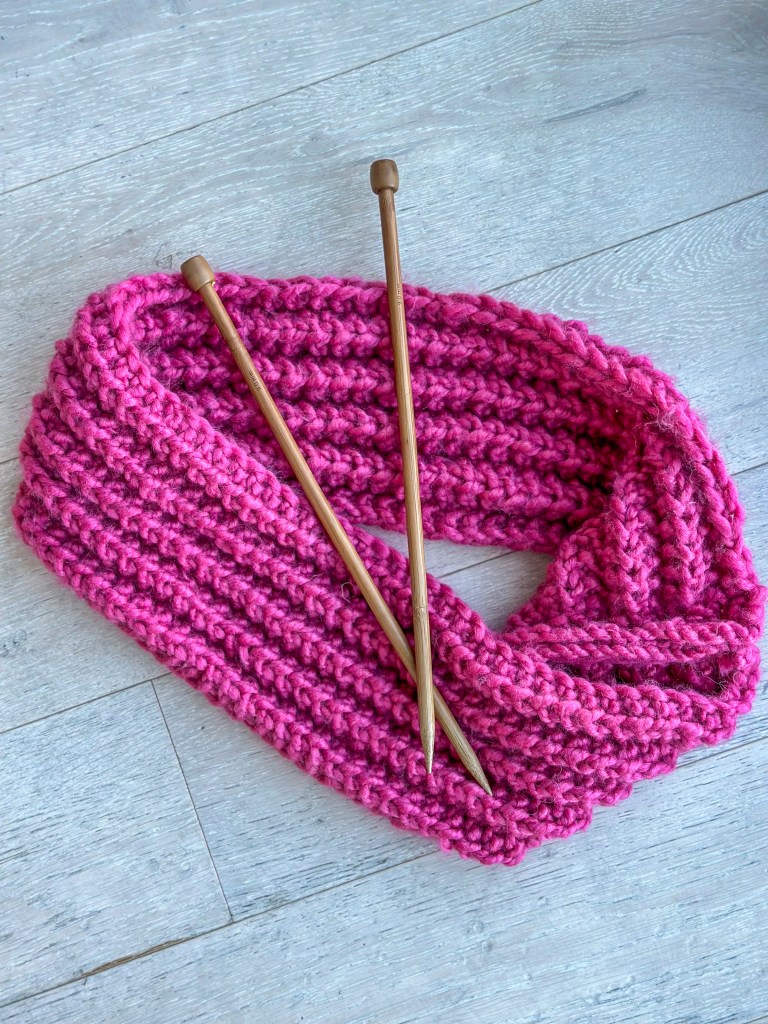
The scarf only used two balls of yarn, leaving me with two others to practice with. These needles weren’t the best quality but were perfect for what I wanted to do. I finished my scarf in a couple of weeks, and was hooked.
Second project: Knitting a sweater
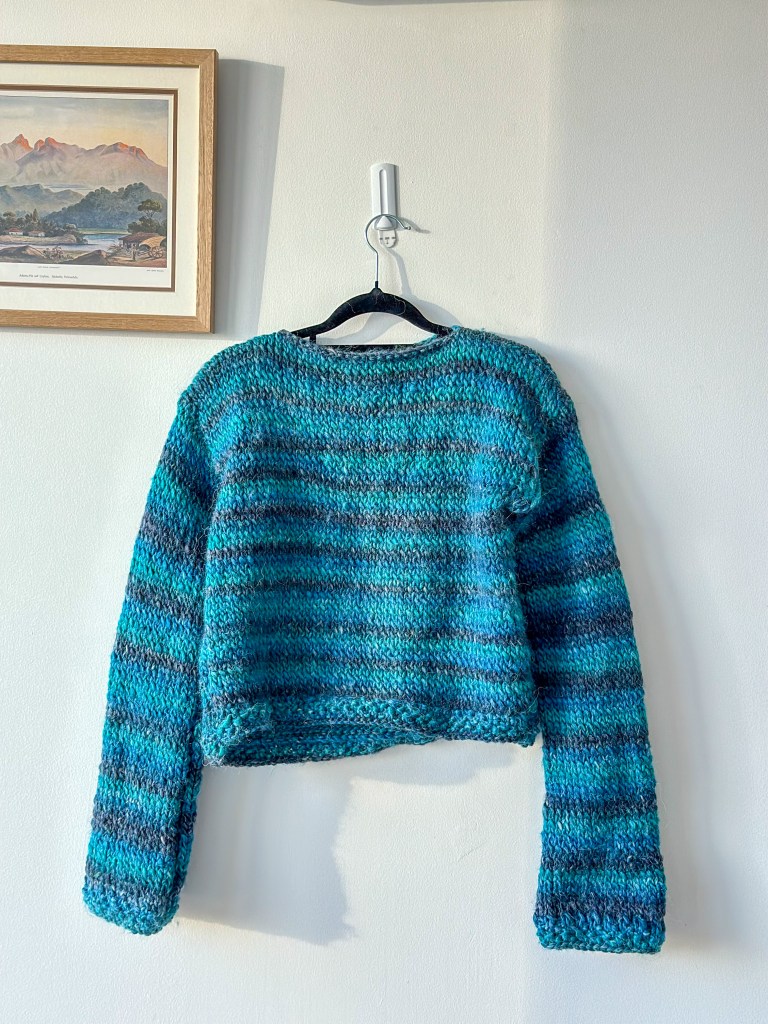
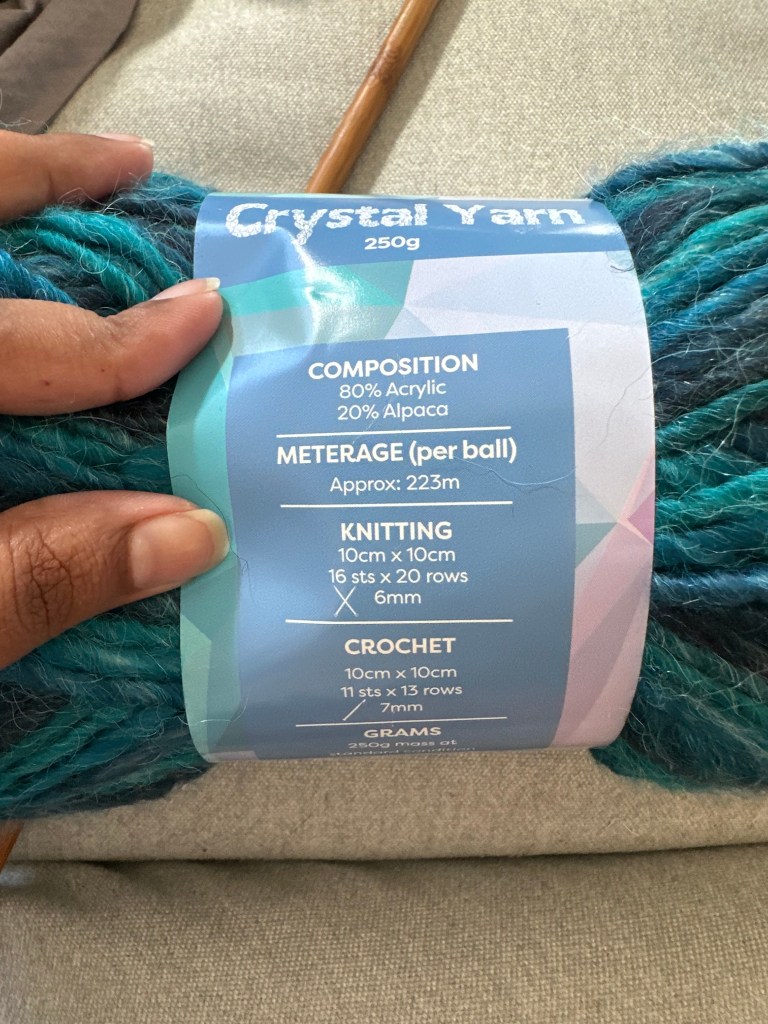
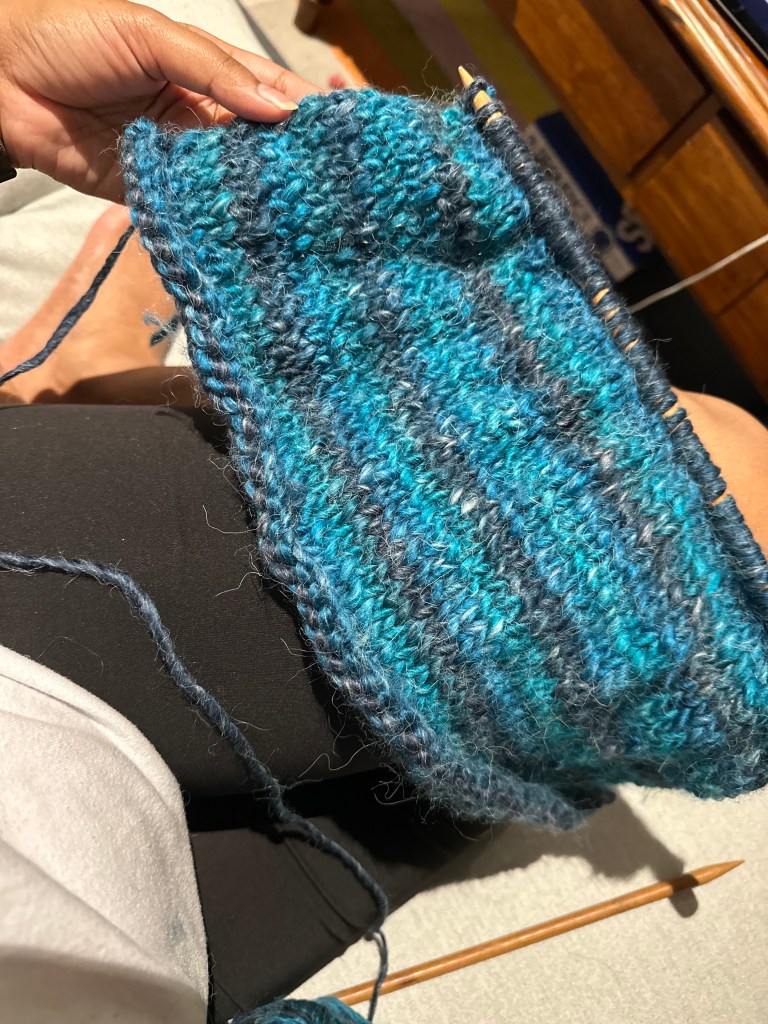
A knitter on a YouTube comment had said contrary to what many tutorials, try knitting a sweater after the first scarf because it gives you the confidence. Minimal spending for best possible outcome being my approach, I chose to spend a bit more on a nicer yarn but use the 9mm bamboo needles. I bought blended yarn: 80% acrylic and 20% alpaca.
- 3 balls of yarn: $12:80 each
- Bought them in-person from Lincraft; no shipping
Third project: Knitting in the round
When you start looking for patterns for garments, you soon realise that almost all the patterns talk about knitting in the round. This requires a different type of needles called circular needles: a pair of needles connected with a cable. They come in different needle sizes + cable sizes.
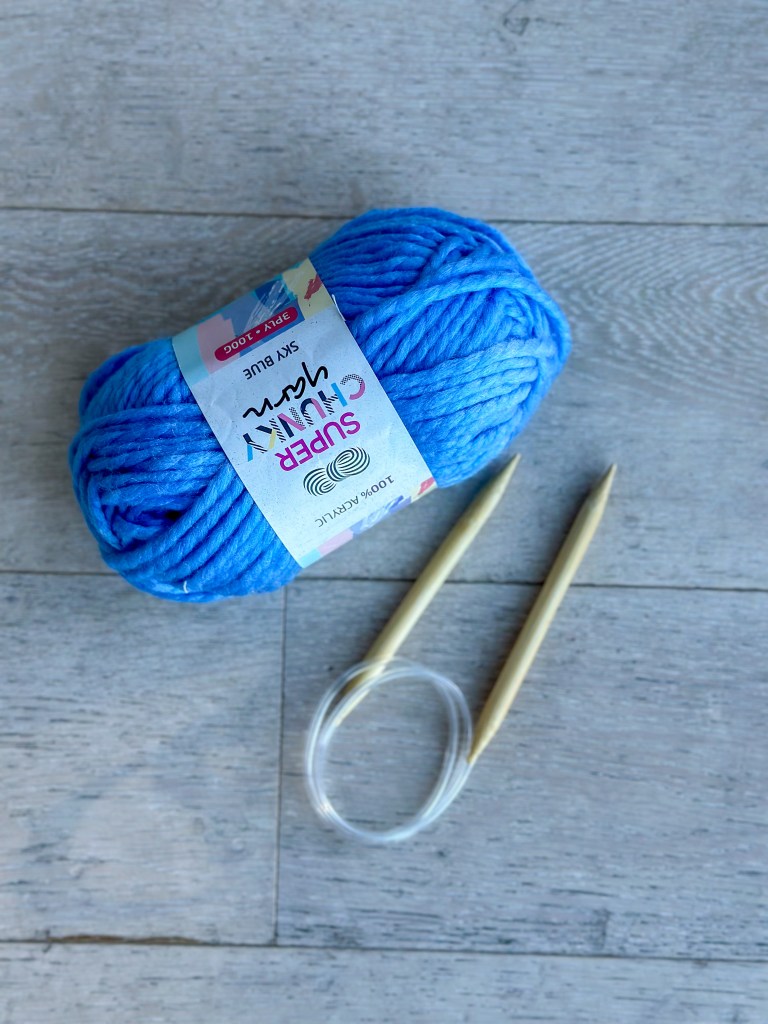
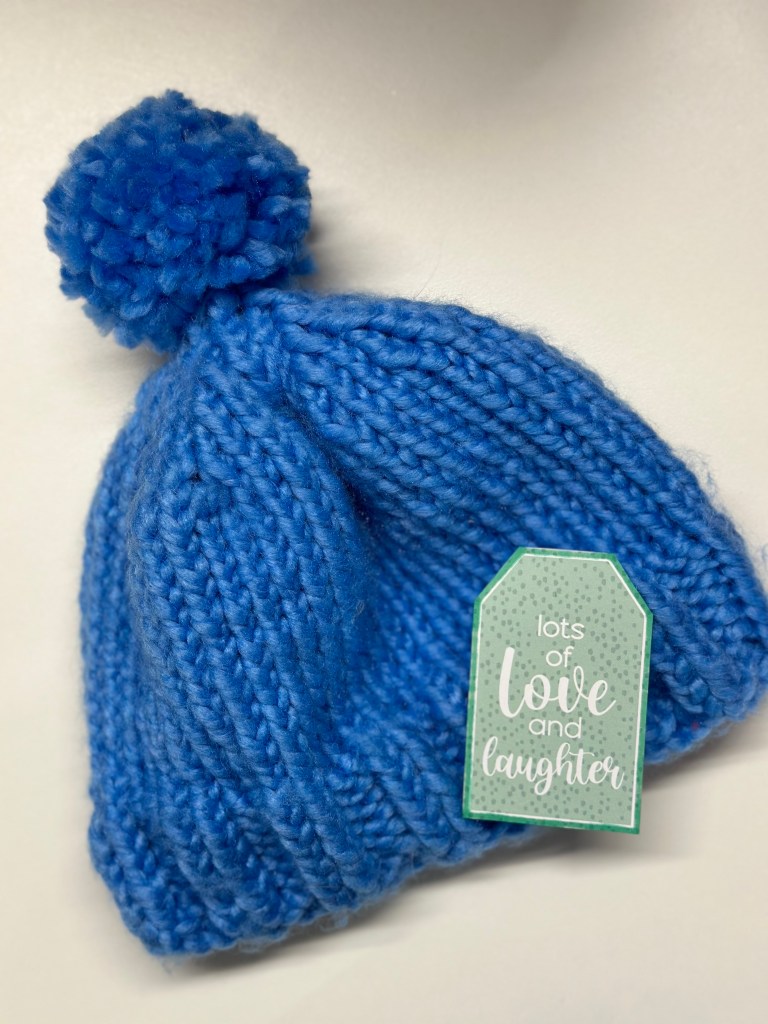
To learn knitting in the round, I purchased one fixed length circular bamboo needle of 9mm 80cm. I decided to use leftover yarn from my first project, the chunky acrylic yarn, to learn to knit a beanie. Upon watching the tutorials, I realised that beanies are done on much smaller cables. Rule of thumb seems to be that your cable length has to be smaller than the circumference of the garment you are knitting.
Do I have to go out and buy another needle now? I refused. Instead, I learnt to knit using the magic loop method, which is where you use a long cable to knit smaller garments. It’s a bit complicated til you get the hang of it. But works great!
- 9mm 80cm fixed bamboo circular needles: $3.50 (bought on sale 60% discount)
Project 4: The Slippery Slope of Circular needles
This is where things get complicated. Depending on what you knit, you need different circular needles. In a sweater, for example, you will use 6mm 40cm circular needles for the neck and sleeves, but a 6.5mm 100cm needle for the body. Considering there are needles from 2mm to 15mm, and cable lengths from 30cm to 120cm, purchasing different needles for different projects is a sure way to break the bank.
There is a solution, though: interchangeable knitting needles. This is a set where the needles come separate from the cables, and you can mix and match however you want. Sets are an investment, and there is much to consider:
- Material: Sets, just like single needles, come in several material. There’s bamboo, wood, aluminium, and stainless steel. Which material to go for is entirely a matter of personal preference.
- Having started with bamboo, by the time my fourth project came around, I found that it was gripping the yarn too hard. This was slowing down my knitting.
- The needles I had purchased, the cheap ones, came with a plastic tubular connecting cable which would bend at the connecting point causing me to stop knitting to get stitches on the cable every time.
- Needle sizes. I haven’t found a set that has smaller needles AND chunky needles. It seems to be an either/or situation.
- Appearance. The pretty cases were way more expensive!
Considering how much I was knitting, and how much I was planning to knit, it made sense to invest in a needle set at this point. A set of interchangeable circular needles means you will not have to buy needles even to make scarves because you can knit flat on circular needles (but can’t knit in the round on flat needles). Unless I want to do a chunky project, I don’t see myself purchasing a pair of needles again. Even then, I will buy interchangeable needles (no cable) so they can become part of my set.
I went with KnitPro Symfonie Wood interchangeable needle set. The needles are laminated birchwood, which gives more than bamboo but not as much as stainless steel. (I also don’t like the click-clack of the steel needles.) To top it all off, they are gorgeous!
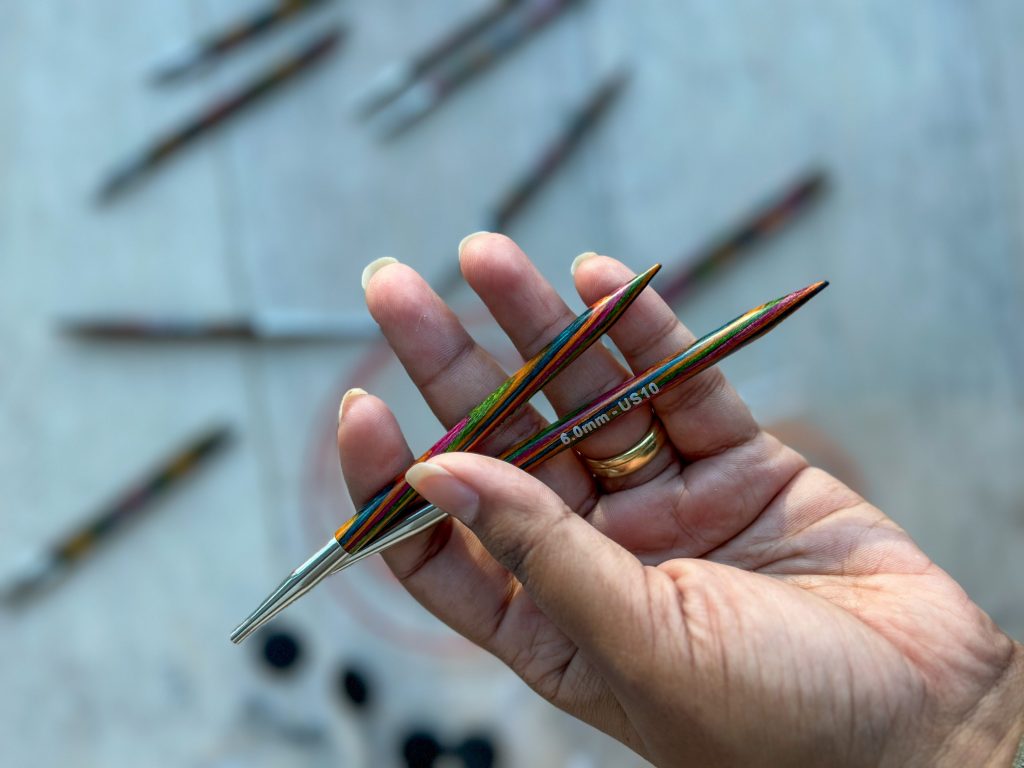
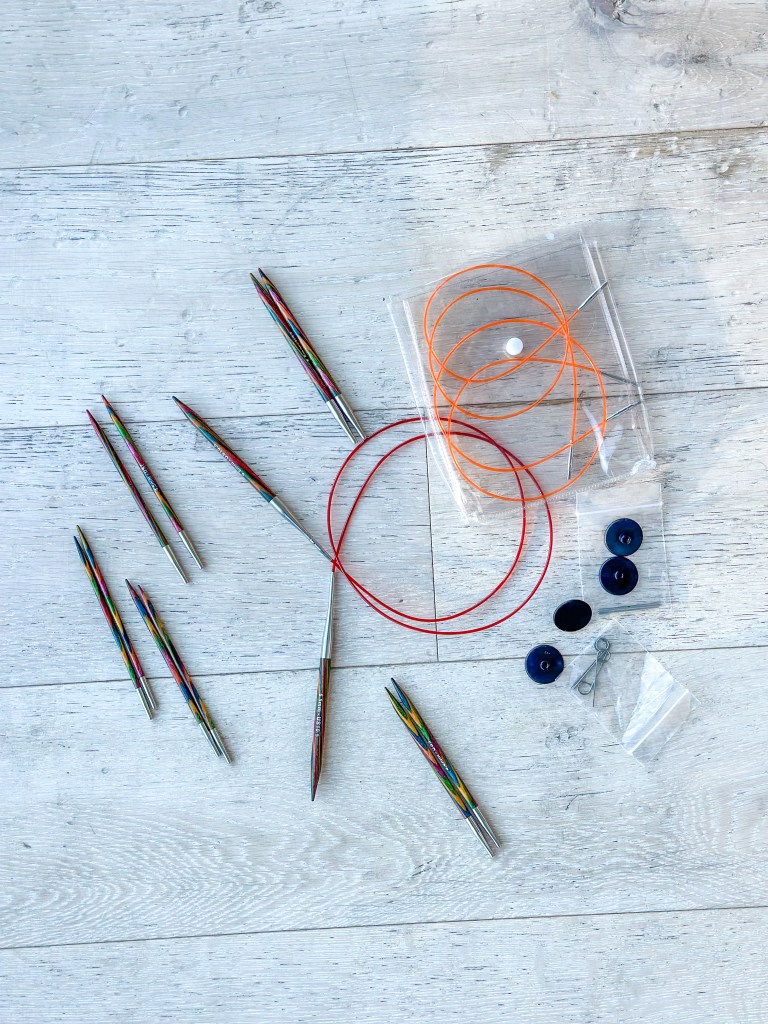
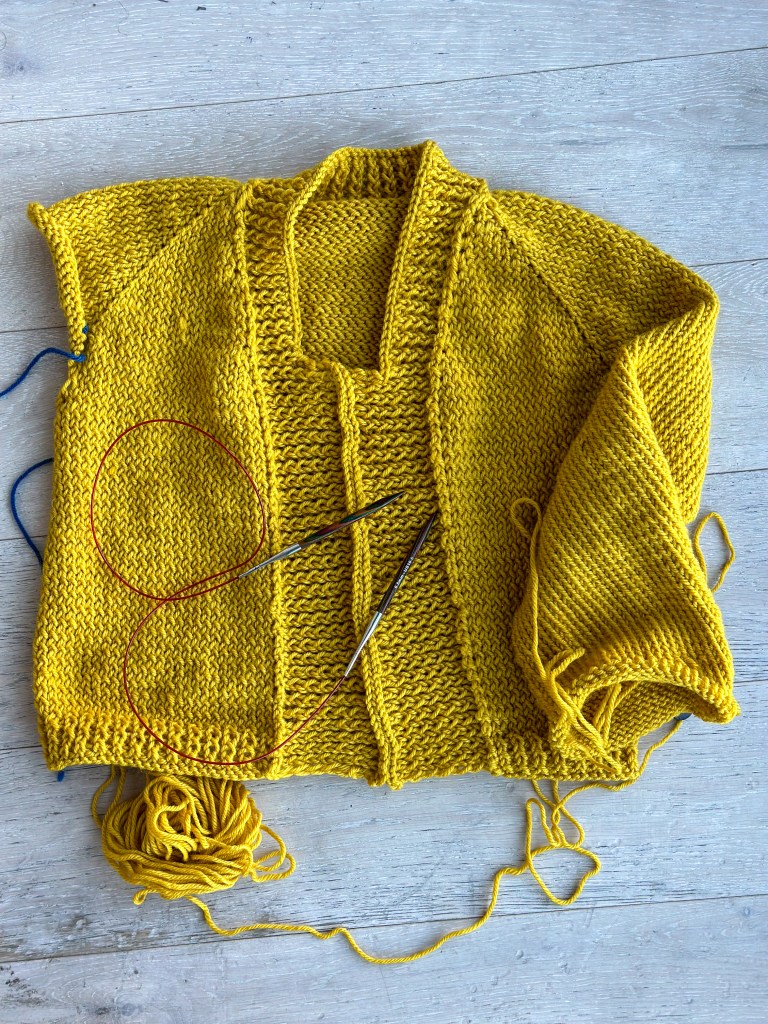
This is the most I’ve spent on this hobby of mine. I feel good about it, though, because I did my time and due diligence before spending all this. Now I can spend a little more on buying nicer yarn as well. My current project – a cardigan that ended up being a sweater – is also a blend; this time, it’s more natural fibre (52% Merino wool 48% acrylic).
In Conclusion,
If you’re starting out and knitting on a budget:
- Borrow needles and yarn where possible
- Buy them from a thrift store if you have any around you/close to you. You can buy a sweater and take it apart to get the yarn, for example
- Buy the cheapest possible tools until you figure out if this is something you will want to do in the long-run
- Research! There’s so much free resources out there. Follow standard research procedure though: multiple sources, verify, etc.
- Ask someone more experienced than you for tips and help. I’ve found the people at yarn shops to be the friendliest, loveliest people who are just thrilled to share their passion with another person. They are a great resource!
- Enjoy the process. As Mrs Zimmermann says:
Reminds me of the infuriating remark, “I’ve always wanted to knit, but I just can’t.” Pish, my good woman, you can plan meals, can’t you? You can put your hair up? You can type, write fairly legibly, shuffle cards? All of these are more difficult than knitting. You just don’t want to knit, so why pretend that you do? It’s not compulsory; take up something else.
Elizabeth Zimmermann, Knitting Without Tears


